|
|
|
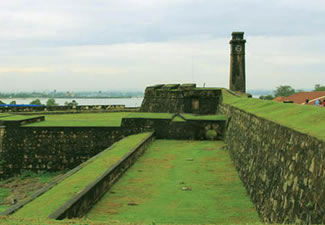
Galle Fort, in the Bay of Galle on the southwest coast of Sri Lanka, was built first in 1588 by the Portuguese, then extensively fortified by the Dutch during the 17th century from 1649 onwards. It is a historical, archaeological and architectural heritage monument, which even after more than 423 years maintains a polished appearance, due to extensive reconstruction work done by Archaeological Department of Sri Lanka. The fort has a colourful history, and today has a multi-ethnic and multi-religious population.[2][3][4] The Sri Lankan government and many Dutch people who still own some of the properties inside the fort are looking at making this one of the modern wonders of the world.[4][5] The heritage value of the fort has been recognized by the UNESCO and the site has been inscribed as a cultural heritage UNESCO World Heritage Site under criteria iv, for its unique exposition of "an urban ensemble which illustrates the interaction of European architecture and South Asian traditions from the 16th to the 19th centuries." The Galle Fort, also known as the Dutch Fort or the "Ramparts of Galle", withstood the Boxing Day tsunami which damaged part of coastal area Galle town. It has been since restored. |
|
|
||
|
|
|
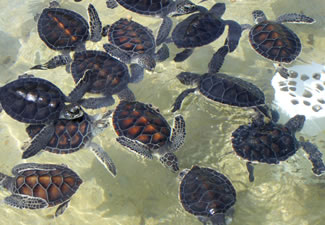
The "Sea Turtle Farm & Hatchery" is a non - profitable organization which is maintained for the survival of Sea Turtles for the next generation. The "Turtle Farm" is situated in Habaraduwa (southern part of Sri Lanka - Galle District) near to the beautiful beach. That is 5m from the Galle - Matara main road. The center was started in 1986 and up to now we have released more than 500,000 Sea Turtles to the ocean.
There are five varieties of Sea Turtles found in Sri Lanka, namely Olive Ridley Turtle, Loggerhead Turtle, Green Turtle, Hawksbill Turtle and Leatherhead Turtle. The all major nesting habitats are located in the Galle District (Bentota, Induruwa, Kosgoda, Thibbattawa, Ahungalle, Balapitiya and Unawatuna) and Hambantota District (Rekawa, Wellodaya, Kahanda modara, Walawemodara and Yala). |
|
|
||
|
|
|
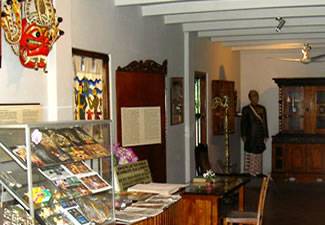
This museum is designed to introduce into the richness of the mask tradition of Ambalangoda and to strengthen this cultural heritage. The museum, the workshop and the small library (containing all available anthropological literature on masks performances) may serve as a centre for traditional arts and crafts and for research as well. The Karava people (fisher community) living in the western and south-western coastal areas of Sri Lanka have developed a great variety of social customs. The south-west coast area, es-specially Ambalangoda is particularly well known for its masks plays and rituals that are performed on different accasions. Among these performances there are two famous ones, the Kolam Maduwa and the rituals to expel evil demons which cause diseases. |
|
|
||
|
|
|
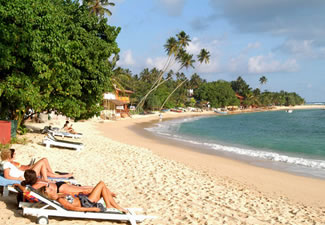
Unawatuna is a coastal town in Galle district of Sri Lanka. Unawatuna is a major tourist attraction in Sri Lanka and famous for its beautiful beach and corals. It is a suburb of Galle, about 5 kilometres (3.1 mi) southeast to the city center and approximately 108 kilometres (67 mi) south of Colombo. Unawatuna is situated at an elevation of 5 metres (16 ft) above the sea level. Unawatuna traces its roots to the great epic Ramayana. In the epic, the monkey-warrior Hanuman was sent back to India to fetch the four medicinal herbs by Jambavan namely, mritasanjeevani, vishalyakarani, suvarnakarani, and sandhani from the Himalayas in order to heal Lakshman who was wounded trying to save the abducted Princess Sita from the demon king Ravana. Hanuman failed to identify these herbs, so he lifted the entire mountain and carried it to the battlefield to try to save Lakshman, but in the process, a chunk of it "fell-down" in the location of the present day Unawatuna, the name of the village derives from "Una-watuna" meaning "fell down". |
|
|
||
|
|
|
It’s unlikely that you will get bored in Mirissa but if you need to explore the surroundings then here are a few options and places to see. Heading back in the direction of Colombo you will find the small fishing town and railway hub of Welligama . It’s a 15 minutes bus ride ( 4 KM ) and getting lost in the back streets of this small market town can be fun . Take a stroll along the sea front and watch the fishermen dragging their boats up on shore or selling their fish in their small shops. The is a bank here, some small internet shops and lots of places to buy small local items ideal for gifts. The Port of Galle ( Galla ) is about another 30 minutes further on towards Colombo . If this is your main destination be sure to get a bus with a seat available or you will be standing all the way with a million other people. |
|
|
||
|
|
|
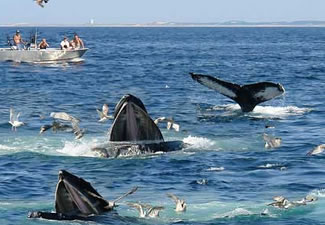
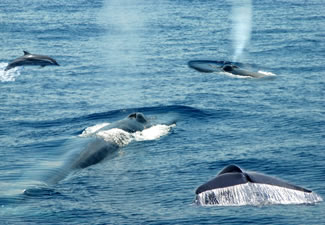
"The passenger craft Princess of Lanka" utilized for whale watching/sea cruises under the auspices of Jet liner nautical enterprise will chart the waters as a recreational cruise ship whilst witnessing the beauty of Sri Lankan territorial waters in Indian ocean where passengers will have a rare opportunity of close encounter with the largest living mammals and spinning dolphins with luxury and comfort. The ship is redressed and equipped to cater to the needs of the new clientele and is manned by a well disciplined and highly trained professional naval crew who are in par with the best in the hospitality industry. The cruises are scheduled to operate from Galle and Trincomalee during the period of month of November to April and month of May to October respectively. The list of packages offered by the whale watching project and the procedure of booking are in this site. |
|
|
||
|
|
|
|
|
|
||
|
|
|
|
|
|
|
|
February 24-26, 2016 | BMICH, Colombo
Quick info Links